 Lisbon, 13 October 2025 – As part of the Cork Science and Applications 2025 (CSA25) conference, held from 13 to 15 October in Lisbon and organised by the University of Aveiro and the University of Lisbon, an oral presentation entitled ‘Methodology for obtaining anatomical slides of the phloem from Quercus suber L.’ was given.
The work was carried out by María Conde García from the Institute of Forest Sciences (ICIFOR-INIA, CSIC).
A step forward in the anatomical study of the cork oak
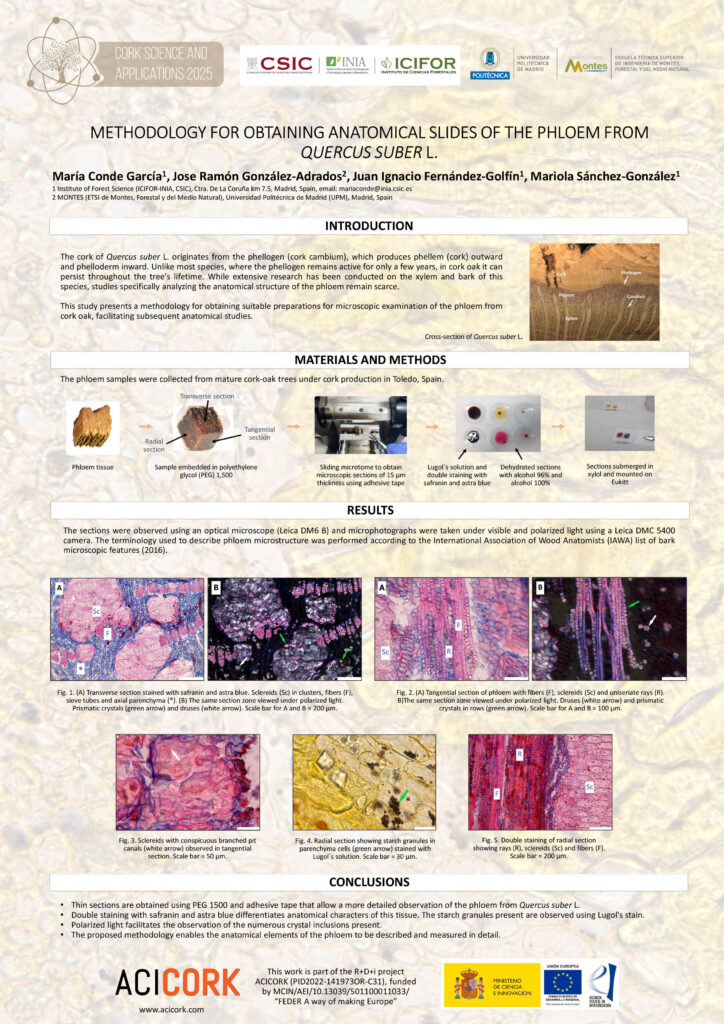
Cork from the cork oak (Quercus suber L.) originates from the phellogen (cork cambium), which generates phelloderm (cork) on the outside and phelloderm on the inside. Unlike most species, where the phellogen remains active for only a few years, in the cork oak it can remain functional throughout the tree’s life.
Although there is extensive research on the xylem and bark of the cork oak, studies that specifically examine the anatomical structure of the phloem remain limited. In this context, the work presented describes a methodology for obtaining histological preparations suitable for microscopic examination of this tissue.
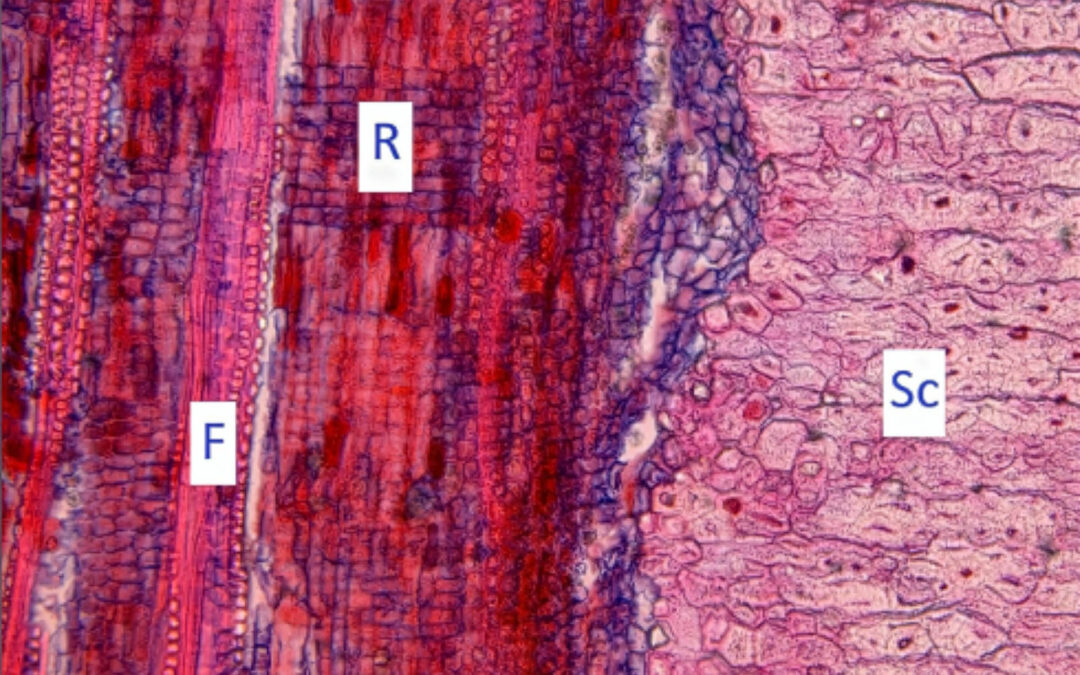
The methodology used involves impregnating the sample in polyethylene glycol, using adhesive tape to facilitate cutting, and applying different staining techniques to highlight the structure of the phloem. In addition, the procedure is complemented by microphotographs taken under visible and polarised light that show the different anatomical elements in detail.
According to the authors, this methodological proposal constitutes a significant contribution to the anatomical study of cork oak phloem, providing a useful tool for future research on the physiology, regeneration and production of cork.